

A launch scheduled for September 10 will begin a multi-month effort to deploy 126 data transport satellites and 28 missile warning and tracking satellites into low Earth orbit.
Amentum to modernize launch operations through $4B Space Force contract

Amentum has secured a contract to operate and maintain the Space Force’s two primary launch ranges.
550,000 individuals will benefit from the new hospital.

The new Sintra Hospital, which will open on Monday, will open its basic emergency department on Saturday at 8:00 a.m., according to the head of the Amadora-Sintra Local Health Unit’s (ULS) board of directors.
The Sintra Hospital, which will support Professor Doutor Fernando Fonseca Hospital (HFF), will begin operating in a phased manner, starting with consultations today. The basic emergency department, SUB, will open on Saturday, followed by surgical and inpatient services on Monday. The hospital is fully operational, with the volume of activity increasing gradually to ensure proper functioning and patient safety. The basic emergency service will resume operations on Saturday, starting at 8:00 AM. Patients needing to access the service should call SNS24, and if referred to the SUB, they will be referred to the hospital. The new Sintra Hospital will relieve pressure on HFF, one of the largest hospitals in the Lisbon and Tagus Valley region, by treating non-urgent cases in the emergency department.
Read Full: https://shorturl.at/4Z8R1
Portugal Blackout on April 28 Causes Up to €200 Million in Economic Losses in Just One Day

Lisbon, April 29, 2025 –
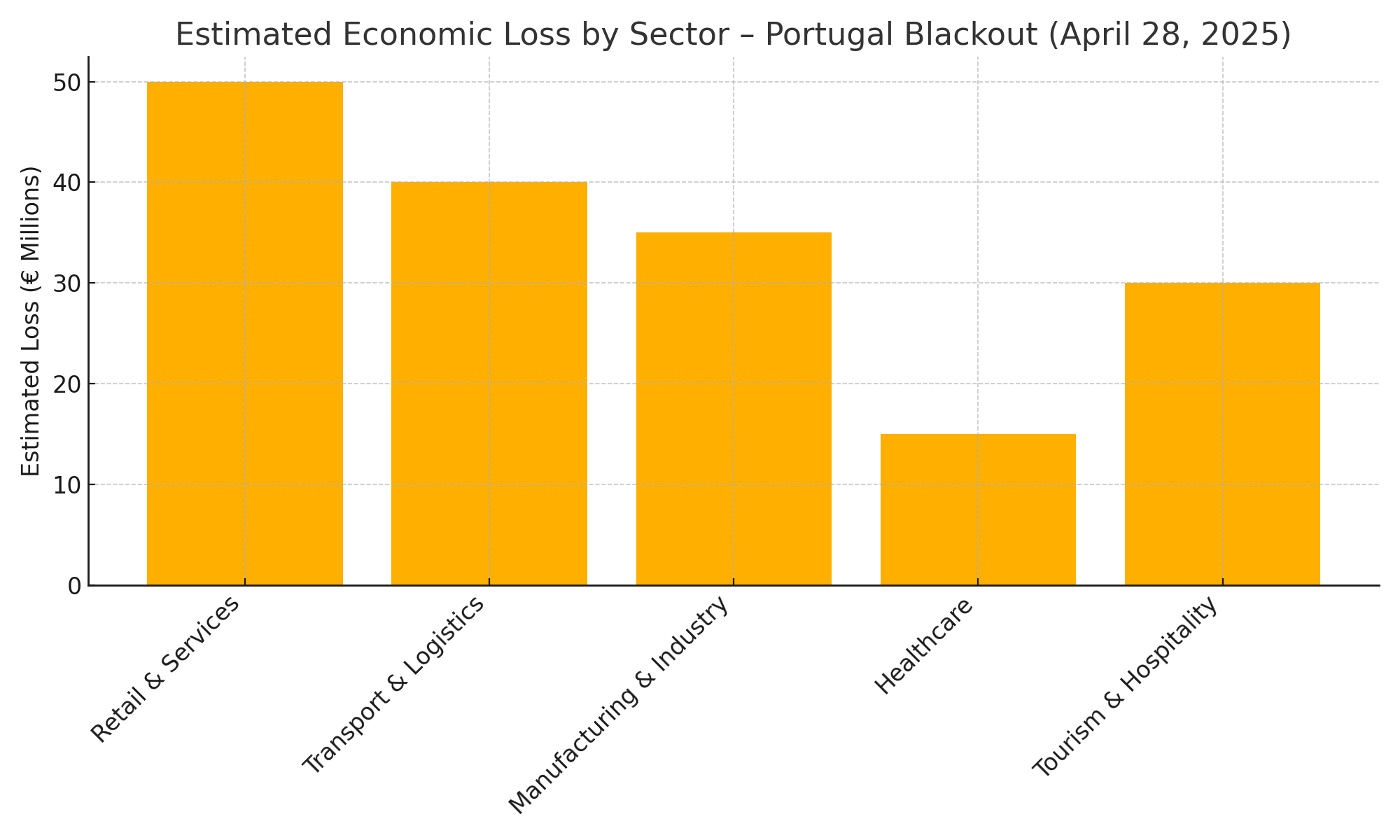
Portugal blackout April 28 left millions without power, shutting down public transport, businesses, and daily life across major cities. The widespread power outage, which lasted for several hours, resulted in an estimated €200 million in economic losses. As authorities investigate the cause, the incident highlights the vulnerability of critical infrastructure across the country. According to initial estimates, the nationwide outage may have caused economic losses between €150 million and €200 million, with critical sectors like retail, transportation, manufacturing, healthcare, and tourism bearing the brunt.
What Caused the Blackout?
At approximately midday, Portugal’s national electricity grid experienced a sudden failure, leading to a widespread collapse of energy distribution. The blackout was triggered by a sharp, unexplained loss of 15 gigawatts of electricity in Spain—about 60% of its national demand—causing a ripple effect across the Iberian Peninsula.
While investigations are still underway, early analysis suggests the outage could be tied to a technical fault or instability in the transnational power grid. No official confirmation has yet been released regarding the root cause.
Economic Impact by Sector
The blackout’s toll on Portugal’s one-day economy has been severe. Key sectors faced the following estimated losses:
Real-World Disruptions
Retail and Payment Systems
Supermarkets, shops, and restaurants were forced to shut down as electronic payment systems and ATMs went offline. Many businesses reported significant revenue losses, especially in urban centers like Lisbon and Porto.
Transport & Logistics Paralysis
Public transport—including metro and train networks—ground to a halt, and traffic lights across major intersections failed, leading to widespread congestion and delays. Logistics companies also reported delays in delivery schedules and supply chain interruptions.
Industrial Shutdowns
Factories were forced to suspend operations, resulting in missed production targets, damaged equipment from sudden stops, and delayed shipments. Industries in electronics, auto parts, and textiles reported measurable financial hits.
Healthcare Challenges
While hospitals continued critical operations using emergency generators, outpatient services and elective surgeries were postponed. This led to both financial losses and service backlogs in the healthcare system.
Impact on Tourism and Hospitality
The hospitality industry, already sensitive to cancellations and disruptions, faced hotel rebookings, stranded tourists, and a drop in customer footfall in restaurants, museums, and public venues.
Government Response and Infrastructure Concerns
Following the Portugal blackout April 28, government officials have vowed to investigate the root cause of the outage and strengthen national power infrastructure. Preliminary reports suggest equipment failure at a central grid station, but experts warn of broader systemic vulnerabilities. Local authorities have also urged citizens and businesses to invest in backup energy sources. This incident has reignited debates around Portugal’s energy resilience and the need for investment in smart grid technologies. As the country recovers, policymakers face mounting pressure to prevent such widespread disruptions in the future and ensure reliable power supply to meet growing demand.
What This Means for Portugal’s Future
The blackout has exposed structural vulnerabilities in Portugal’s energy and digital infrastructure. Experts and policymakers are now calling for urgent investments in:
-
Decentralized energy systems and renewables
-
Stronger grid monitoring and fail-safe technologies
-
Backup power for essential services
-
Offline-capable financial systems and emergency business protocols
The April 28 power outage in Portugal stands as a stark reminder of how fragile modern economies are in the face of energy infrastructure failure. A blackout that lasted just hours has already cost the country hundreds of millions of euros, disrupted millions of lives, and highlighted the urgent need for systemic resilience. This event has become a turning point for Portugal’s energy future.
As the investigation continues, this event may serve as a catalyst for energy reform, digital infrastructure upgrades, and emergency readiness across Portugal and the wider EU.
Meta Unveils SEO-Friendly Changes to Content Moderation Policies

Meta, the parent company of Facebook and Instagram, has announced a groundbreaking update to its content moderation policies. Designed to promote free speech and address persistent criticisms, these changes are set to reshape the landscape of social media. Here’s everything you need to know about Meta’s latest policy overhaul.
Meta Ends Third-Party Fact-Checking: A Big Step Forward
Meta has decided to discontinue its partnerships with third-party fact-checking organizations. In their place, the tech giant is rolling out a new feature called “Community Notes,” inspired by the successful model used by X (formerly Twitter). This change empowers users to collaboratively add context and clarify information shared on the platform.
“We believe in a decentralized approach to addressing misinformation, giving our community the tools to fact-check and discuss,” stated CEO Mark Zuckerberg.
Content Moderation Teams Relocated to Texas
In a strategic move to address claims of cultural bias, Meta is relocating its content moderation teams from California to Texas. This geographic shift aims to include diverse perspectives and provide a more balanced approach to moderation decisions.
Sensitive Topics: Policy Adjustments That Matter
Meta is revisiting its policies on sensitive discussions, including immigration and gender identity. The company’s updated guidelines allow users to express views, even controversial ones, without immediate censorship. Statements based on religious beliefs about LGBTQ+ topics, for instance, will no longer be flagged automatically as hate speech.
Why Meta Is Making These Changes
Meta’s policy revisions align with the incoming U.S. administration’s stance on free expression. Zuckerberg emphasized the importance of reducing errors and biases in content moderation to foster a more open and inclusive online environment.
“Our goal is to lead the global conversation on freedom of expression by balancing user safety and the right to speak freely,” Zuckerberg explained.
Community and Industry Reactions
Support for Free Speech
Free speech advocates are applauding Meta’s changes. Jonathan Miller, spokesperson for the Free Expression Alliance, commented, “This is a win for open discourse and a major step toward reducing overreach in content moderation.”
Concerns from Advocacy Groups
Conversely, LGBTQ+ advocacy organizations and other groups have raised concerns. They argue that loosening restrictions could increase hate speech and harm marginalized communities.
“Freedom of speech should not come at the expense of safety,” said Sarah Johnson, director of Equality Matters. “Meta must ensure that its platforms do not become breeding grounds for harmful rhetoric.”
What This Means for the Future of Social Media
Meta’s bold policy updates mark a significant shift in the social media industry. As the company prioritizes free speech while navigating safety concerns, these changes could influence how other platforms approach content moderation.
The introduction of Community Notes and the decentralization of fact-checking set a precedent that other tech giants may follow. With global eyes on Meta, the balance between freedom and responsibility will remain a critical topic in the years to come.
Urgent US Government Warning: AndroxGh0st and Mozi Botnet Threaten IoT and Cloud Security

The U.S. government has issued a critical alert about the AndroxGh0st malware, now combined with the Mozi botnet to target IoT and cloud infrastructure. This powerful malware duo exploits vulnerabilities in unpatched devices, creating a heightened cybersecurity risk. This article explores the latest developments around AndroxGh0st and Mozi, their targets, and how organizations can safeguard against this growing threat.
AndroxGh0st Malware’s Evolution and Impact on IoT and Cloud Security
AndroxGh0st, originally a Python-based malware, was initially used to exploit vulnerabilities in applications such as Apache, Laravel, and PHPUnit. Recently, however, it has evolved, expanding its targets to include firmware vulnerabilities in devices from Cisco, TP-Link, Sophos, and Atlassian. This has widened its impact across diverse sectors, from healthcare and manufacturing to finance, where it compromises IoT devices and cloud systems.
IoT devices have become particularly vulnerable, serving as entry points for malware like AndroxGh0st. When these devices are left unpatched, they become “backdoors” for attackers to infiltrate networks, access sensitive data, or disrupt operations. The increasing reliance on IoT devices makes securing them essential to prevent future cyber incidents.
How AndroxGh0st and Mozi Botnet Collaborate to Amplify Threats
The Mozi botnet, known for large-scale DDoS attacks and targeting IoT networks, has integrated with AndroxGh0st malware, increasing the attack’s scope and intensity. Mozi’s infection mechanisms enable AndroxGh0st to spread more effectively across IoT networks, infecting devices and compromising entire systems. The combination allows AndroxGh0st to bypass traditional defenses, posing a significant risk to network integrity.
This collaboration between AndroxGh0st and Mozi illustrates a new trend in malware operations, where malware families merge to leverage each other’s strengths. This alliance threatens critical infrastructure, as AndroxGh0st and Mozi target both IoT devices and cloud systems, making it harder to detect and mitigate their impacts.
Understanding the Risks of AndroxGh0st and Mozi on IoT and Cloud Security
The integration of AndroxGh0st and Mozi poses substantial risks to IoT and cloud infrastructure. IoT devices, including routers, cameras, and connected appliances, are often minimally secured, making them prime targets for this malware. Once infected, these devices can be exploited to spread malware throughout cloud systems, compromising both personal and business data.
Industries that rely on IoT for essential services, such as healthcare, logistics, and urban planning (smart cities), face heightened risks from AndroxGh0st and Mozi attacks. By infecting IoT devices, the malware can escalate its access, threatening the overall security of cloud infrastructure and critical operational systems.
Protecting Your Network Against AndroxGh0st and Mozi Botnet
With the growing sophistication of AndroxGh0st and Mozi, the U.S. government and cybersecurity experts recommend the following steps:
- Regular Firmware and Software Updates: Regularly update the firmware and software of IoT devices, routers, firewalls, and other connected systems to close vulnerabilities exploited by these malware systems.
- Network Segmentation: Isolate IoT devices from core networks to contain potential infections and prevent malware from spreading. Segmenting networks adds a layer of protection, minimizing the impact of a compromised IoT device.
- Advanced Threat Detection and Monitoring: Use threat detection solutions to monitor unusual behavior and identify potential malware activity, such as unauthorized device connections or suspicious data transmissions. These tools can help detect signs of AndroxGh0st or Mozi infections.
- Employee Training: Educate employees on recognizing phishing attempts and securing personal devices. Cybersecurity awareness training reduces the risk of malware infiltrating networks through human error.
- AI-Driven Security Solutions: Deploying AI-based cybersecurity tools can help identify anomalous patterns and detect sophisticated malware behavior that traditional defenses might miss. AI-driven solutions are particularly effective against evolving threats like AndroxGh0st.
The rise of AndroxGh0st and Mozi highlights the need for advanced cybersecurity measures, especially in IoT and cloud environments. This partnership between malware families signals an evolving cyber threat landscape that demands proactive defense. By implementing robust cybersecurity practices, organizations can protect against the sophisticated tactics of AndroxGh0st and Mozi. Ensuring regular updates, network segmentation, and employee awareness are vital steps in safeguarding against this serious threat to IoT and cloud security.
Donald Trump Wins 2024 U.S. Presidential Election, Defeating Vice President Kamala Harris

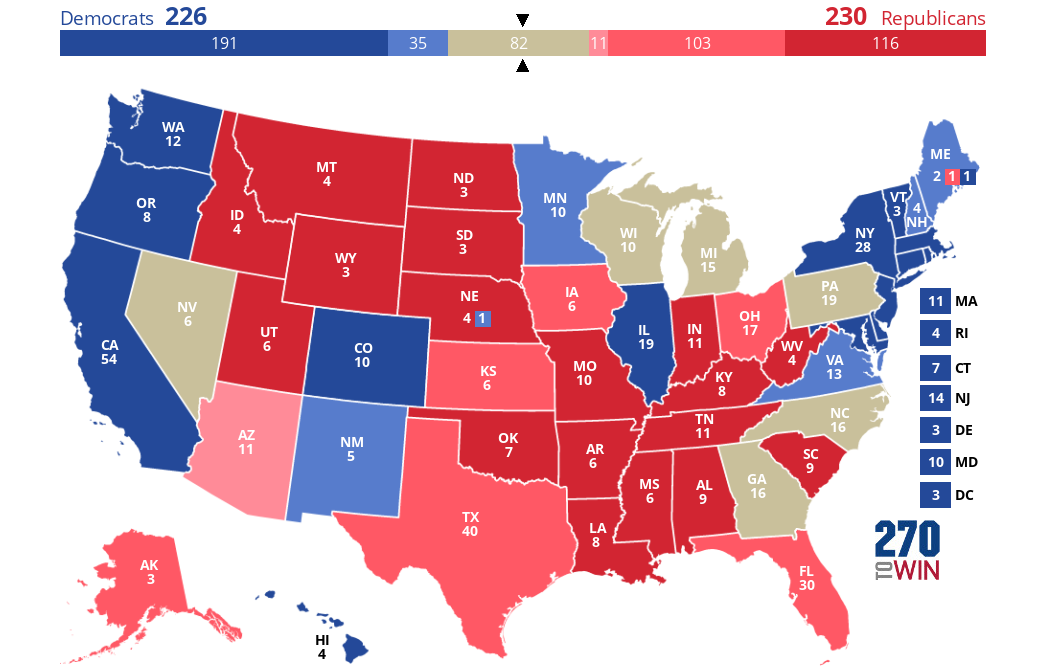
In a closely watched and highly contested election, Donald Trump has secured victory in the 2024 U.S. Presidential Election, defeating Vice President Kamala Harris. With a decisive win in key battleground states, Trump reached 277 electoral votes, surpassing the required 270 to clinch the presidency, as confirmed by the Associated Press.
Key Election Results
According to official tallies, Trump garnered approximately 51% of the popular vote, amounting to over 70 million votes, while Harris received 47.5%, with roughly 66 million votes. Trump’s strong performance in swing states like Florida, Pennsylvania, and Ohio proved critical, contributing significantly to his electoral count. Meanwhile, Harris dominated in traditionally Democratic states along the West Coast and Northeast but fell short in key regions of the Midwest.
Voter Turnout and Public Sentiment
The 2024 election saw a record voter turnout, reflecting the high stakes and intense public interest. Many voters expressed their priorities on issues like inflation, immigration, and healthcare, which became central talking points during the campaign. Trump’s message on economic revival and border security resonated with large sections of the electorate, helping him regain support in states he lost in the previous election.
Implications for U.S. Policy and Global Relations
With Trump returning to office, his administration is expected to revisit several policies that marked his first term, including his stance on trade, immigration, and energy independence. International leaders are watching closely, as Trump’s election is anticipated to bring changes to U.S. foreign policy, particularly regarding relations with China, Russia, and NATO allies.
The Road Ahead
This election outcome signifies a renewed chapter in American politics and poses new challenges for the incoming administration. Both parties will now look towards Congress, where legislative cooperation will be essential in the coming years. Meanwhile, Harris’ concession speech emphasized the need for unity and resilience, signaling her commitment to continue advocating for issues central to her campaign.
How to Apply for a Time Counting Certificate in Portugal: Step-by-Step Guide for Citizenship

Table of Contents
In Portugal, one of the key steps toward acquiring Portuguese nationality based on residence is proving that you have legally resided in the country for at least five years. This is a requirement under the Nationality Law (Law No. 37/81). Importantly, this period of residence does not have to be continuous; as long as all periods of legal residence add up to five years within a 15-year interval, you can qualify for citizenship.
The time counted must be of legal residence, meaning your status in Portugal must be regularized with the authorities, whether through visas, residence authorizations, or other legal mechanisms.
To assist with this process, individuals can request a Time Counting Certificate from the Portuguese Immigration and Borders Service (SEF). This certificate is crucial as it provides an official confirmation of your legal residence periods, which are needed to determine your eligibility for citizenship.
Steps to Apply for a Time Counting Certificate in Portugal
- Ensure Your Legal Residence Status is Documented: The certificate only considers legal residence in Portugal, so make sure that your stay in the country has been properly registered with SEF. This includes holding valid visas or residence permits during your time in Portugal.
- Request the Time Counting Certificate from SEF: To obtain the certificate, you will need to make an official request to SEF. This can be done either online through their website or by visiting one of their local offices. The certificate will provide a detailed account of the time SEF considers as legal residence.
- Prepare Necessary Documentation: You may be asked to provide documents to support your request, including:
- Copies of your visas, residence permits, or other legal documents showing your status in Portugal.
- A valid ID or passport.
- Submit Your Request: After gathering the necessary documents, submit your application either online through SEF’s platform or in person at a SEF office.
- Review the Certificate: Once issued, the certificate will show the periods that SEF has counted as legal residence. This will help you understand whether you meet the 5-year residence requirement for nationality purposes.
- Use the Certificate for Citizenship Application: After confirming that you have the required five years of legal residence, you can proceed with your application for Portuguese citizenship. Include the
- Time Counting Certificate as part of the documentation needed for your nationality application.
Why the Time Counting Certificate is Important
This certificate is vital because it clarifies the exact periods of your legal residence in Portugal. It ensures that you have accumulated the necessary time to apply for citizenship and helps avoid any discrepancies during the nationality application process. For those who have spent time in Portugal intermittently or under different legal statuses, this certificate provides clarity on how SEF views your residence periods.
If you are unsure about your eligibility, requesting this certificate early in the process can prevent delays in your citizenship application.
For more information, visit SEF’s official website or consult the Portuguese Nationality Law (Law No. 37/81) for detailed guidelines on residency and nationality requirements.
Or get Professional Guidance contact Samaya associacao
id.gov.pt: Your digital wallet for official documents.
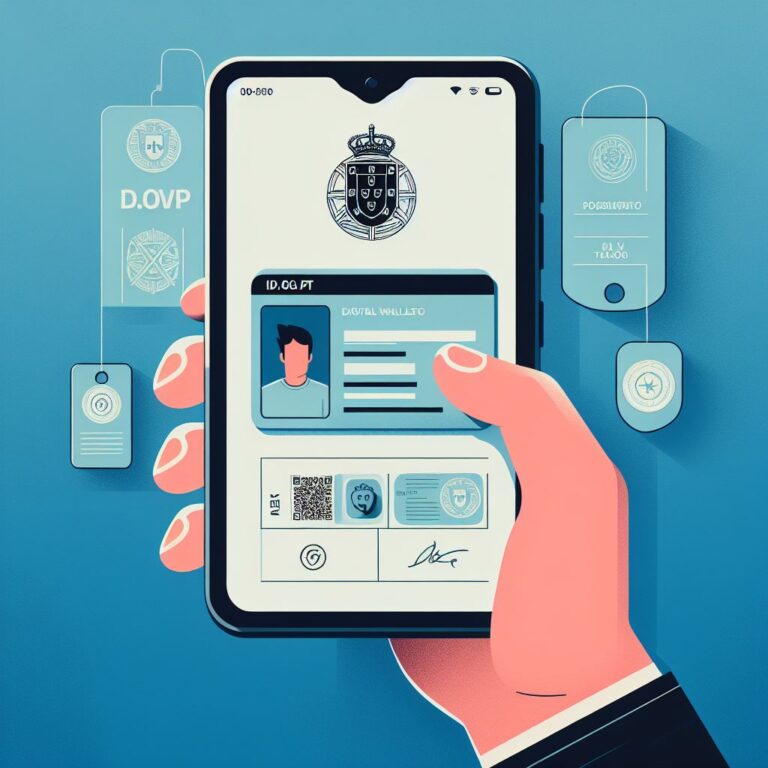
Do you want to carry your driving license, citizen card, and other important documents with you wherever you go, without worrying about losing them or forgetting them at home? Do you want to access and share them easily and securely, with just a few taps on your cell phone? Do you want to enjoy the same legal rights and guarantees as if you had the physical documents?
If you answered yes to any of these questions, then you need id.gov.pt, the mobile application that lets you store, view, and present your identification data in digital format. Thanks to a recent amendment to Law 19-A/2024, the documents you have on id.gov.pt are now legally equivalent to the original ones, and can be verified in real time by any third party in the country.
id.gov.pt is the ultimate digital wallet for your official documents. Download it today and discover the convenience and security of having your identity always with you.
source: theportugalnews.pt
Digital Transformation in Migrant Services: Portugal’s New Law Explained

Portugal has taken a significant step towards improving services for migrant citizens. A regulatory decree has been published in the Diário da República which introduces changes to the regulation of the legal regime for the entry, stay, exit, and removal of foreign citizens from the national territory. The Agency for Integration, Migrations, and Asylum (AIMA) has been given new functions under this decree. AIMA was created on October 29th to replace the Foreigners and Borders Service (SEF) and the High Commissioner for Migrations (ACM). The GNR and PSP have now become the institutions responsible for border control.
The decree aims to modernize and simplify administrative procedures. This will ensure that AIMA can instruct and decide processes relating to the stay of foreign citizens in the national territory in a timely manner and with compliance requirements. With this new regulatory decree, it will also be possible to make digital services available on the AIMA Portal. This includes sending, receiving, and paying for residence permit applications, eliminating the need to schedule appointments and travel to physical locations. This change will free up employees from tasks without added value, such as the processing of payment of fees.
One of the main reasons for complaints from legal immigrants in Portugal has been related to family reunification processes. The new law addresses this issue by allowing digital applications for the granting and renewal of residence permits. These applications can also be made by employers, research centers, or educational establishments in which immigrants are included.
Overall, the new law represents Portugal’s commitment to creating a more inclusive and welcoming environment for all its residents. It simplifies and modernizes administrative procedures, making it easier for migrants to apply for and renew residence permits. It also addresses the issue of family reunification, a significant concern for many migrants.